
Is it better to write by hand or type?
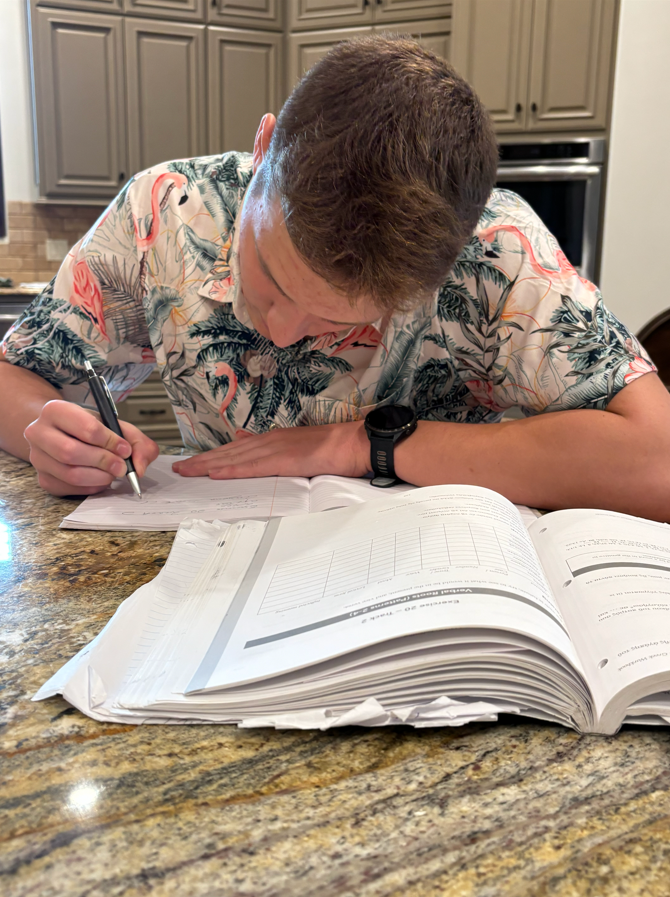
There is a growing body of research that points to writing by hand being better for our brains than typing, but the answer to this question may be more nuanced as we may choose one or the other based on a variety of criteria.
To start with, what do we mean here when we refer to handwriting or typing? Studies have centered around writing with a pen or pencil, but writing with a stylus on a screen can engage the brain in similar ways as handwriting, especially where the technology simulates the feeling of physical touch (haptic technology).
Handwriting involves processing information in the brain and controlling our hand and fingers to perform the physical act of producing letters on the writing surface. Typing involves processing information in the brain and tapping fingers on a keyboard. However, the two processes show very different results under MRI and PET scans.
Typing can be performed much more quickly than handwriting. By comparison, handwriting requires time for multi-sensory integration. Handwriting engages the sensory and visual systems as we look at the letters forming on the page. That feedback helps our brain fine tune coordination of the pressure needed in each finger, as well as the movement of the hand and arm. We continuously monitor and adjust, anticipating the next shape and executing with our motor system.
This takes more time than tapping on a keyboard, which means that when we're taking notes, we can't write things down verbatim, so we must also process the information. We grasp the meaning and organize the information, relating it to what we know already, fitting it into a knowledge structure. We paraphrase, consolidate, and prioritize information when writing. Sometimes we not only write words, but we may draw lines and arrows as we develop conceptual frameworks.

It is not surprising that research has found that students who take handwritten notes retain conceptual information better than students who type their notes. Writers need to process and transform the information, resulting in greater cognitive involvement and deeper learning and retention.
Due to the speed of typing, researchers have also found that note-taking by typing usually happens verbatim, resulting in shallower information processing and the passive use of a lot of working memory. Typing doesn't require the synchronized activity amongst the various parts of the brain as when a person is writing by hand.
In fact, in the research, brain scans show different brain activation patterns. Handwriting activates a broader network of brain regions involved in motor, sensory, and cognitive processing, as well as memory and language, while typing activates mainly motor regions of the brain related to visual processing and repetitive finger movements. Typing relies on procedural memory, which is the memory that allows us to perform tasks (such as tying shoes, reading, riding a bike, typing, etc.) without having to re-learn them.
Researchers believe that for young children, learning to write by hand helps to "bake in" neural patterns that are important for learning later on. Handwriting involves fine motor control, and for children, developing dexterity in the coordination of the small muscles in the fingers is useful in life. Typing involves muscles in the hands and fingers, but the movement, repetitive finger tapping, results in homogenous letters on a screen that don't require visual feedback and motor adjustment to produce. Frequent typing may also mean less developed precision in hand and arm movements.
Writing by hand wins out for our brain, but...
Even though typing may not engage our neural circuits as much and we might not process and retain as much as when we're writing by hand, the answer to whether it is better to write by hand or type can be nuanced. This is because we can find ourselves in a myriad of circumstances and many factors can be considered when choosing one or the other:
Age
For children in the developmental stages of life, the plasticity of their brain promotes learning and adaptation. Learning to write letters (printed or cursive or both) engages the fine motor system to help stimulate growing brains and bodies.
Adults who need cognitive rehabilitation, rehabilitation of fine motor skills, or who want to possibly prevent degeneration by stimulating their brains may want to use the richer process of handwriting more often than typing. Examples include when recovering from stroke or brain injury. To note, changes in handwriting are sometimes observed in people who may have diseases that affect the motor system (i.e. Parkinsons).
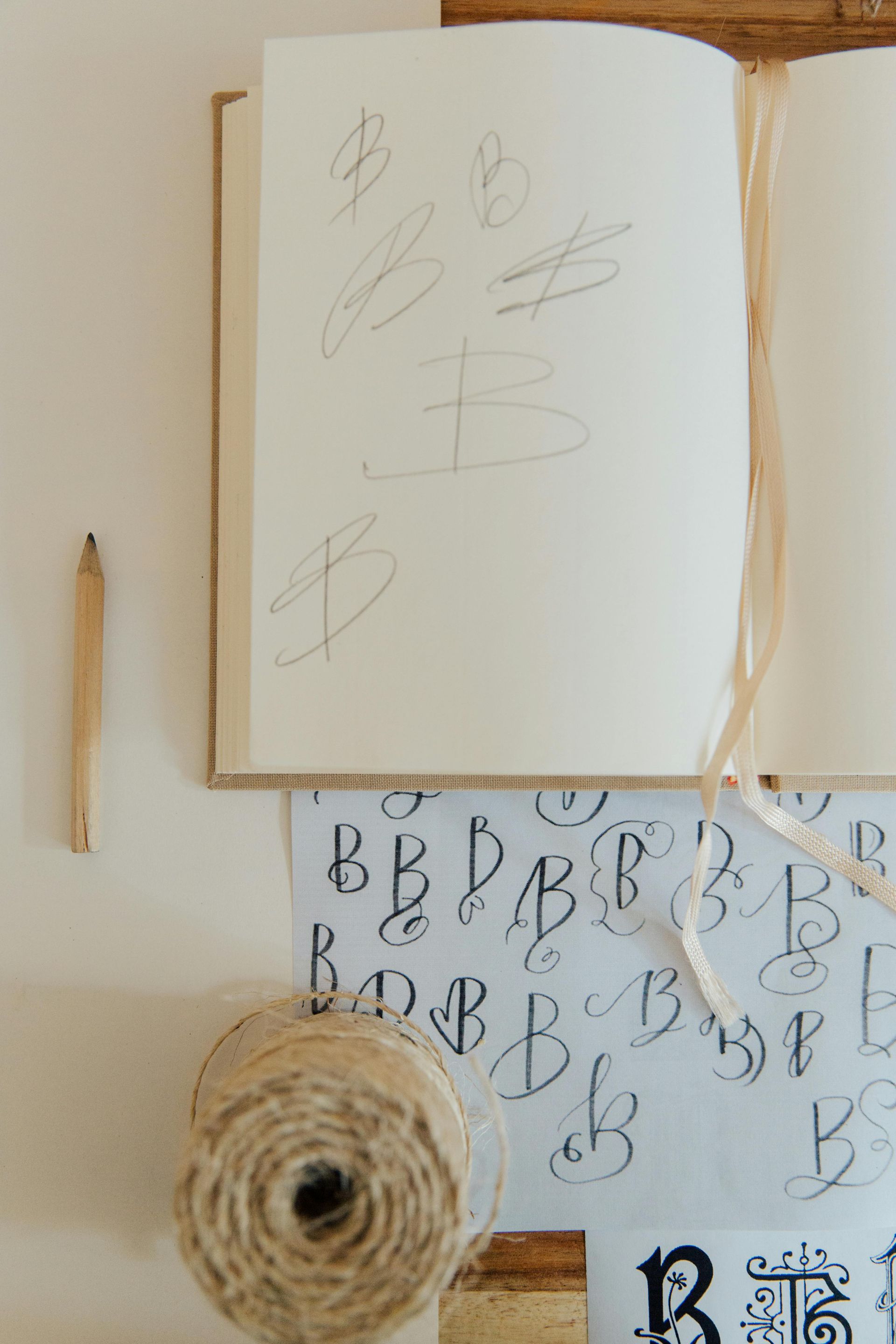
At any age, we can learn to augment our handwriting abilities, experimenting with sizes, styles (i.e. calligraphy), colors, etc. Writing by hand, because it is slower than typing, can help us to develop our ideas more fully. It can also lend itself to more creativity.
Time
If we're pressed for time and we don't need to retain the information as well, then typing wins out. The same is true if we need a homogenous result quickly -- typed letters are standardized.
Result / Convenience
Similarly, if we need to have a consistent result that is always legible, typing would be the choice over handwriting.
Add to that the need or convenience of being able to search, edit, and/or share the information online, and typing wins again. In some educational contexts, if the goal is to create a transcription, then typing verbatim is more practical than writing everything by hand. Another idea is to create handwritten notes using the transcription, building on familiarity of the information developed during the transcribing.
Type of task and the context
Writing by hand lends itself better to problem solving and to synthesizing ideas due to its slower pace and our brains encoding the information more deeply than when typing.
The context should be considered as well. With an educational goal where information needs to be processed, learned, and retained, handwriting would be the preferred choice. Where the goal is a creative one, again, handwriting would offer the most opportunity for exploring different ideas, shapes, etc.
In the context of a grocery list or a calendar that needs to be shared with another person, one would choose typing because the information can be typed and edited online and shared instantly.
The variety of software applications is amazing these days. For example, there are apps for brainstorming and for flash cards, activities traditionally done with pen and paper. However, it might make more sense to use a brainstorming app that can be projected onto a screen so that a roomful of people can "be on the same page". Or, creating flash cards online makes it easy to edit and share them amongst a study group. The context should therefore be taken into account.
Accessibility
Sometimes typing is the method of choice due to accessibility considerations. Ergonomic keyboards, desks, and chairs make typing more comfortable.
Conclusion
We hope to have provided some "food for thought" and ideas as to when best to write by hand and when to type.
While researching and writing this blog, we realize the importance of engaging our brains and bodies rather than relying too much on technology. Doing so does take work, but we believe that the benefits are worth it!
References and Resources
- National Library of Medicine on The Neuroscience Behind Writing - https://pmc.ncbi.nlm.nih.gov/articles/PMC11943480/
- NPR on Why writing by hand beats typing for thinking and learning - https://www.npr.org/sections/health-shots/2024/05/11/1250529661/handwriting-cursive-typing-schools-learning-brain
- Scientific American on Why writing by hand is better for memory and learning - https://www.scientificamerican.com/article/why-writing-by-hand-is-better-for-memory-and-learning/
- Cornell University on Handwriting vs. Typing - https://blogs.cornell.edu/communityeducation/2025/08/29/handwriting-vs-typing-which-is-better/
- Wikipedia on procedural memory - https://en.wikipedia.org/wiki/Procedural_memory