
Is it ok to rub your eyes?

It may feel good, but it can actually do quite a bit of damage!
This month's blog answers last month's email quiz question: Why is it not good to rub our eyes? We delve into why and what we can do instead, to protect our delicate pieces of equipment.
Email quiz question: Why is it not good to rub our eyes?
Answer: f) All of the above.
These were the choices:
a) We can increase the chances of spreading infections.
Our hands touch many objects and surfaces, some of which may have germs that transfer to our hands. We can inadvertently introduce them into our eyes, causing infection or more irritation. Inversely, we may unknowingly have an infected eye and spread that infection to others, for example when shaking hands or bumping fists.
b) Rubbing eyes frequently can lead to a damaged cornea (the outermost layer that covers the front of the eye. It is a protective layer that is part of the focusing process).
Eye-rubbing can weaken the structure of the cornea, accelerating or leading to a condition called keratoconus, which is the thinning of the cornea and its shape changing -- it bulges into a cone shape. Currently, there is no cure for keratoconus, but early detection and intervention is crucial to help prevent further visual decline. People with keratoconus can see double, have blurry vision, and become very sensitive to light. Worsening vision problems due to a scarred cornea may require cornea transplant surgery.
To note, keratoconus that develops during childhood tends to progress faster than when it emerges during puberty. Treatment is specific to each individual and depends on the disease stage and symptoms, amongst other factors.
c) Rubbing eyes frequently can lead to bags under our eyes.
While this may be surprising, frequent rubbing can loosen the collagen bonds in the skin. Without these bonds, we can develop eyelid drooping, bags under our eyes, and fine lines and wrinkles around our eyes. Eye rubbing can also stretch the eyelid skin, causing redness and inflammation.
Constant rubbing can cause permanent damage to the muscle pump that drains tears, leading to watery eye.
d) We can potentially tear our retina (the layer inside the eye that detects light and converts it to signals for the brain)
Depending on the severity and frequency of rubbing, it can cause retina damage, conjunctivitis (pink eye), a cataract, and/or exacerbate glaucoma.
e) Children who rub their eyes can suffer from bulging of the cornea.
This can lead to decreased vision, scarring of the cornea, and possibly the need for a corneal transplant.
f) All of the above.
Choices a) to e) are all true. This is the correct answer.
g) Choices a), b), d), and e).
Choice c) is also true, so this answer isn't correct.
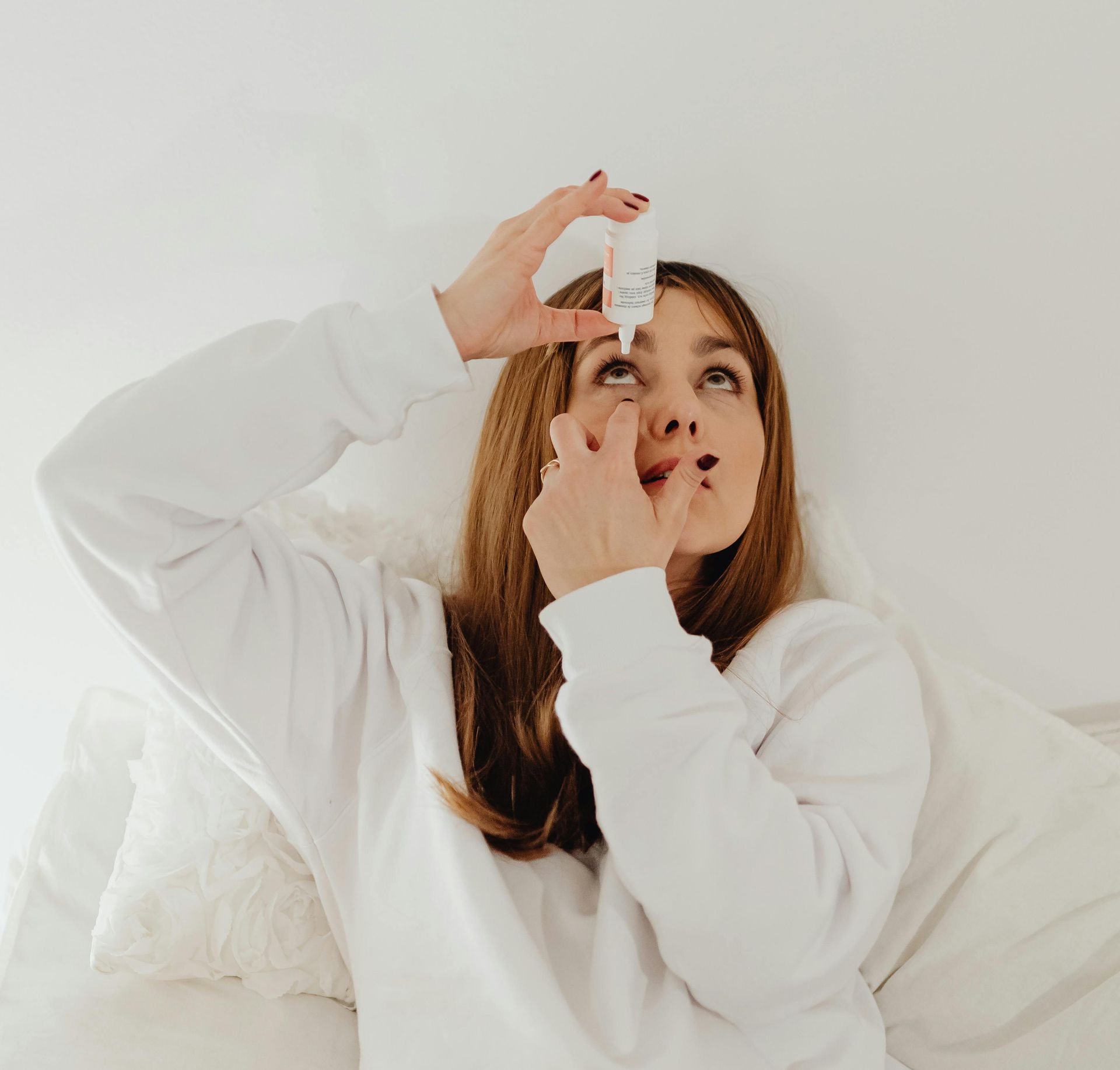
Image credit: karola g on pexels.com
Alternatives
Thinking about what could be causing the frequent eye rubbing and removing the cause is the most effective approach. Here are some ideas for what to do instead, when we feel like rubbing our eyes:
- Wash hands with soap and water. Use a clean tissue instead of fingers if touching the eye directly.
- Wash hands with soap and water. Use eye moisturizing drops. Tears normally protect the front of our eyes, but where not enough tears are produced or they are not the right composition, our eyes are exposed to the environment and we can feel that we have dry eyes. Drops help to moisturize dry eyes. They can also help relieve irritation by flushing out small objects in the eye. If we need to use drops more than four times a day, we should discuss with an optometrist.
- Talk with a healthcare professional if your eyes get itchy due to allergies. There are no symptoms in the early stages of keratoconus and a 2021 Australian study showed an association between keratoconus and inflammatory conditions such as asthma, hay fever, and eczema. It may thus be worth getting tested for keratoconus if you or your child has any of those conditions.
- Talk with your optometrist to see if gently using a hot or cold compress is for you. Generally, hot compresses are used for dry eyes and cold compresses are for itching due to allergies.
- If you wear contacts and one is bothering your eye, wash your hands and try replacing the bothersome contact lens with a new one. Talk with your optometrist if this happens frequently.
- Sometimes, children will rub their eyes if they're developing poor vision.
- Babies should have their vision checked at birth by a pediatrician, and
- A pediatric eye exam should be scheduled:
- From 6 to 12 months
- Between 1 and 3 years
- Between 3 and 5 years
- After age 5, children should have an eye exam every two to three years.
- For some people, rubbing their eyes is a habit that relaxes them. In that case, it is relevant to consider the reasons why the person needs to relax and find better alternatives to eye-rubbing.
And yes, it does feel good to rub our eyes! It relieves the itch. It moisturizes our eyes by inducing tears. But the downside is that the temporary relief can lead to the longer term damage talked about above.
Don't hesitate to see an optometrist if you or a loved one has eye pain, blurry vision, there are changes to the eyes, and/or if symptoms get worse.
We hope that the alternatives to eye rubbing listed above will be helpful!
References and Resources:
University of Utah Health on eye rubbing
https://healthcare.utah.edu/healthfeed/2023/07/why-you-should-stop-rubbing-your-eyes
Banner Health, a hospital system in Arizona, on eye rubbing
https://www.bannerhealth.com/healthcareblog/teach-me/how-and-why-to-avoid-rubbing-your-eyes
The Royal Australian and New Zealand College of Ophthalmologists on eye rubbing
https://ranzco.edu/blog/busting-common-eye-myths-can-rubbing-your-eyes-damage-them/
Centre for Eye Research Australia on keratoconus
https://www.cera.org.au/keratoconus-and-eye-rubbing/
Mayo Clinic on keratoconus
https://www.mayoclinic.org/diseases-conditions/keratoconus/symptoms-causes/syc-20351352
Cleveland Clinic on the danger of rubbing itchy eyes
https://health.clevelandclinic.org/dangers-of-rubbing-itchy-eyes
Cleveland Clinic on pediatric eye exams
https://health.clevelandclinic.org/pediatric-eye-exam
National Library of Medicine publication on risk factors and association with severity of keratoconus
https://pubmed.ncbi.nlm.nih.gov/33200389/